
With petrol prices climbing sharply in response to global instability, millions of drivers are feeling the squeeze every time they pull into a forecourt. But before you resign yourself to paying over the odds, there’s good news: you have more control over your fuel bill than you think. These money-saving car hacks, drawn from the world of hypermiling, can make a real, measurable difference to what you spend at the pump.
Why are petrol prices rising in March 2026?
Petrol prices are determined by a combination of factors, but the biggest single driver is the global price of crude oil, and crude oil is extraordinarily sensitive to geopolitical instability. When conflict or tensions flare in oil-producing regions, markets react quickly, pushing the barrel price up before a single litre has actually changed hands. That spike travels rapidly down the supply chain to the forecourt.
On top of the raw oil price, UK drivers also pay fuel duty (currently frozen at 52.95p per litre, though that freeze is regularly under political pressure) plus VAT at 20% on the total pump price. This means that even a modest rise in the underlying oil price has an amplified effect on what you actually pay. When prices are already elevated, even small global events can push them higher still.
The uncomfortable truth is that the UK government has limited short-term tools to cushion pump prices, and fuel retailers are under no obligation to pass savings on quickly, even when oil prices fall. Which is exactly why taking control of your own fuel consumption is one of the smartest financial moves a driver can make right now.
What is hypermiling?
Hypermiling is the practice of maximising your car’s fuel efficiency through smarter driving habits and simple vehicle maintenance. The concept has been around for over a decade, and while early versions included some genuinely dangerous ideas (maintaining speed through tight corners, for example), the refined, sensible version is a goldmine of practical fuel-saving technique. Think of it less as obsessive penny-pinching and more as getting the absolute most out of every tank, without changing how you live.

10 ways to save fuel (and money) while driving
01. Track your real fuel consumption
Your car’s trip computer is convenient, but it’s not always accurate. For a true picture of your fuel economy, log your fill-ups manually. Note the mileage each time you fill up, how many litres you put in, and calculate your miles per litre. Once you’re watching the numbers, you’ll naturally start driving to improve them — and you’ll quickly notice what hurts your economy most.
Pro tip: Free apps like Fuelio (iOS & Android) or Drivvo make this effortless, and for finding the cheapest nearby forecourt, PetrolPrices is the go-to UK app.
02. Notice how your mood affects your driving
This one surprises people, but it’s real. When you’re stressed, running late, or frustrated by traffic, you accelerate harder, brake later, and make more aggressive manoeuvres, all of which burn more fuel. Alongside your fuel log, jot a quick note about how you were feeling on a given journey. You may find a clear pattern. Calmer driving isn’t just safer; it’s genuinely cheaper.
03. Accelerate gently and gradually
Every time you stamp on the accelerator, you’re demanding a surge of fuel from the engine. The fix is simple: squeeze the pedal rather than stamping it. Build speed slowly and smoothly. If your car has adaptive cruise control, use it to increase speed in small increments on faster roads. It feels odd at first, but you’ll be surprised how little time it actually costs you.
04. Increase your following distance
This is one of the highest-impact changes you can make. Most drivers follow too closely, which forces constant braking and re-accelerating, the two most fuel-hungry driving behaviours there are. Leave a generous gap in front of you, and you’ll be able to coast naturally through speed changes rather than riding the brakes. The car in front slows down? Ease off the accelerator and drift up to the new speed. No brake required, no fuel wasted.
05. Read the road further ahead
Traffic lights, roundabouts, and motorway queues don’t appear without warning, if you’re looking far enough ahead. Spot a red light in the distance? Take your foot off the accelerator immediately and coast towards it. By the time you arrive, it may well have turned green, meaning no stop at all. In slow-moving traffic, find a slow, constant pace rather than stop-starting with the flow. Every unnecessary stop-start costs you money.
06. Check tyre pressures before long journeys
Under-inflated tyres increase the contact patch between rubber and road, which increases rolling resistance, meaning your engine has to work harder to maintain speed. Check your tyre pressures before any significant journey and inflate them to the maximum recommended pressure for your vehicle (found in the handbook or on a sticker inside the driver’s door). It takes five minutes and can improve fuel economy noticeably.
You’ll find the remaining four hypermiling tips in my book, Car Hacks! Get hold of it at Haynes.com or search for “Car Hacks book” on Amazon.

Frequently Asked Questions
Does hypermiling actually work?
Yes, with some important caveats. The driving techniques (smooth acceleration, increased following distance, reading the road ahead) are well-established and genuinely effective. Independent tests have shown that aggressive versus economical driving on the same route can produce fuel economy differences of 30% or more. The maintenance-based tips (tyre pressure, servicing) also have solid evidence behind them. What doesn’t work is the extreme end of hypermiling: things like switching off the engine while moving or taking corners at unsafe speeds. Stick to the sensible version and it absolutely delivers.
What’s the single biggest drain on fuel economy?
Aggressive acceleration and braking is the biggest controllable factor for most drivers. Every time you accelerate hard from a standstill or brake sharply, you’re burning fuel to build momentum and then wasting it. If you only change one habit, make it this: accelerate slowly and leave enough space ahead of you to coast rather than brake. The savings are immediate and significant.
Does the type of petrol I use make a difference?
For most standard petrol cars, the difference between regular unleaded and premium unleaded (such as Shell V-Power or BP Ultimate) is marginal in day-to-day driving, and certainly not worth the price premium when forecourt costs are already high. Premium fuels can offer a modest efficiency benefit in high-performance engines, but for everyday driving, save your money.
How much can I realistically save?
It depends on your current driving habits and how consistently you apply these techniques, but a 10–15% improvement in fuel economy is achievable for most drivers who adopt the key habits, particularly smoother acceleration, increased following distance, and correct tyre pressures. At current fuel prices, that could represent a saving of several hundred pounds per year for a typical driver.
Is hypermiling safe?
The version described in this article, smooth driving, greater awareness, proper maintenance, is not only safe but actively makes you a better, more attentive driver. The dangerous practices sometimes associated with hypermiling (drafting behind lorries, coasting with the engine off) are not recommended here and should be avoided entirely.
Why this is a great Car Hack
When petrol prices rise, most people feel powerless. But the reality is that driving behaviour and basic vehicle maintenance have a significant impact on how far your tank takes you. None of these hacks require spending money, buying gadgets, or drastically changing your life. Applied consistently, they can cut your fuel costs meaningfully – which, at today’s prices, adds up fast.
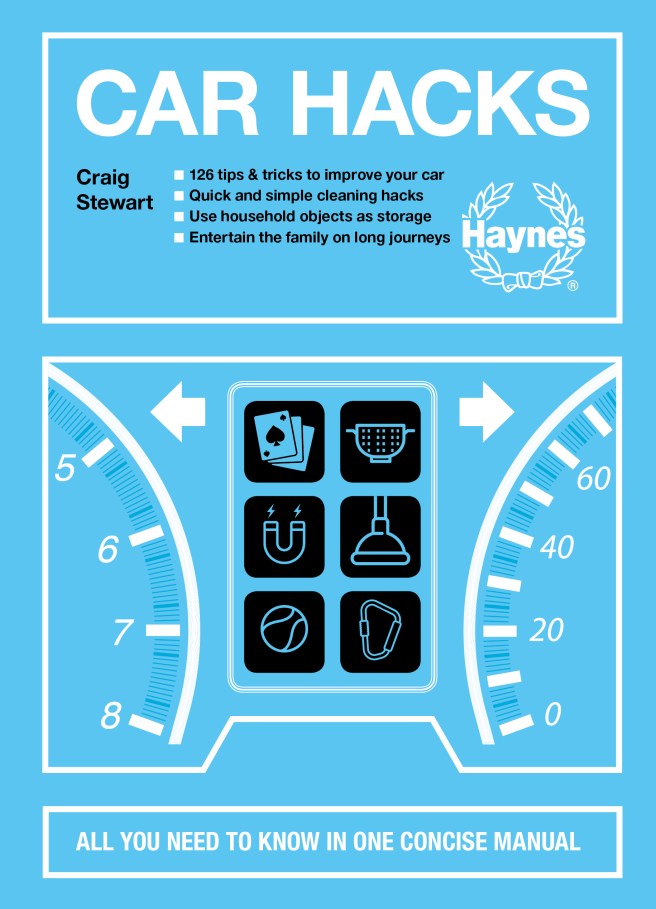
This tip is from the author of Car Hacks – a collection of clever, low-cost ways to make everyday driving, owning and maintaining a car easier, cheaper and less frustrating. If you like practical fixes that use everyday household items (and don’t require mechanical know-how), you’ll find loads more inside the book.
 Car Hacks